




Prescan Core
arrow_left_altTo examinations
Bodyscan

Prescan Core

Insight into your health in one day.

What is examined in a Bodyscan Basic?

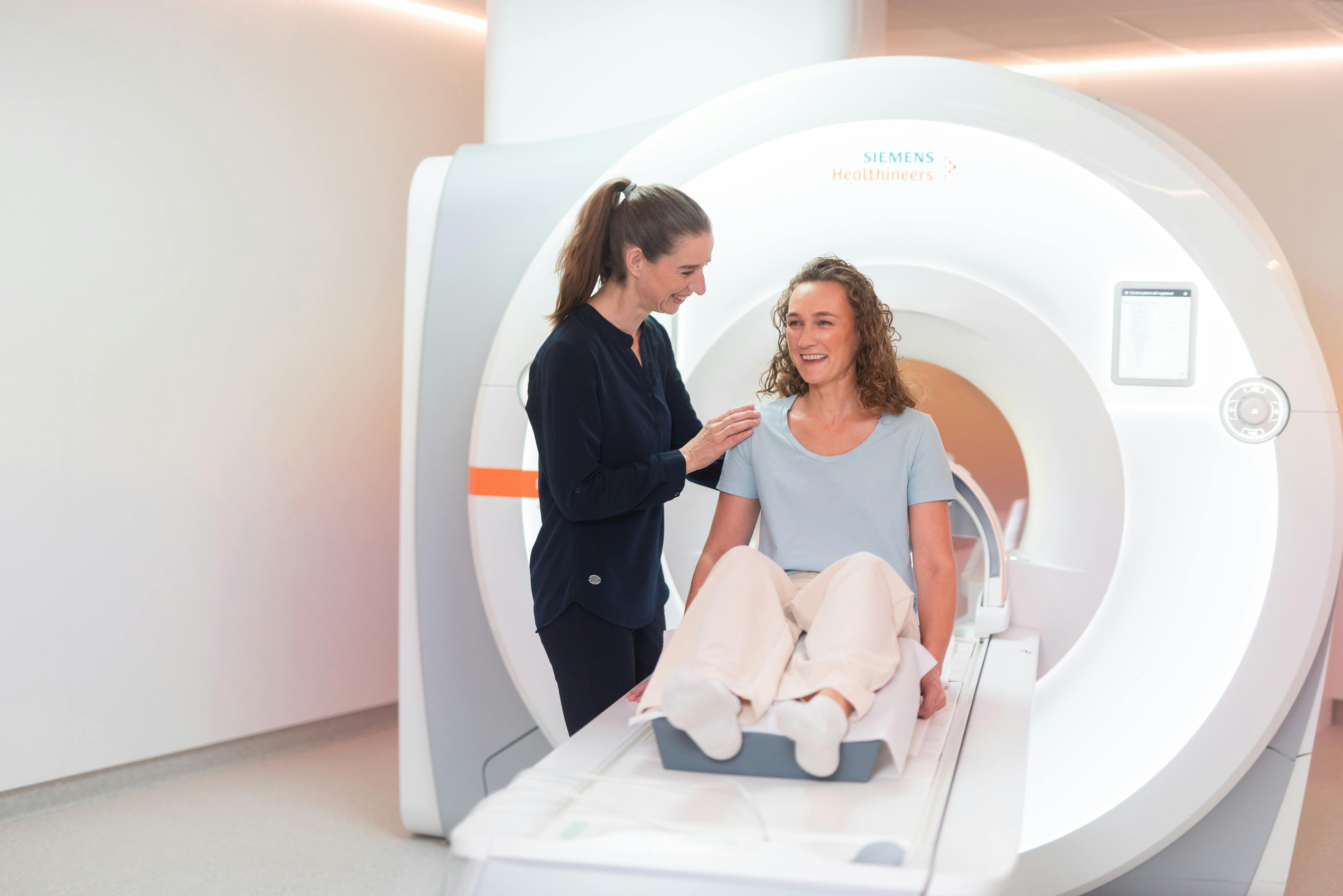
The Prescan Core consists of five MRI scans of the most important body areas: brain, neck vessels, chest, upper abdomen, and lower abdomen. The Bodyscan focuses on the vital organs (this does not include the stomach, intestines, and esophagus). The MRI scans provide information about your health. All scans are evaluated by our medical specialists. You will receive the results the same day.

What does the Prescan Core provide me?

  • You gain preventive insight into your health.
  • All images are reviewed by medical specialists.
  • You will receive the results the same day, with an explanation from medical specialists. This way, you understand what the results say about your health.
  • The MRI images are available in the secure environment of MyPrescan. The report remains available here for 10 years and is easy to share.

Specifications Prescan Core

MRI scan
MRI scan

MRI scan

  • neurology Brain
  • endocrinology Neck
  • rib_cage Chest
  • gastroenterology Upper abdominal
  • nephrology Lower abdomen

Details
  • Provides insight into
  • Pros and cons
  • Alternatives
  • Risks
  • Technical description

Provides insight into

A preventative MRI is intended to detect potential conditions at an early stage, but if you experience symptoms or notice significant changes, you should always contact your GP.

  • The scan at Prescan provides a clear image of various anatomical structures in the brain. This includes brain tissue, blood vessels, ventricles (cavities in the brain), and the skull, giving you insight into your brain.
  • A preventive scan can also detect potential abnormalities, such as cysts, haemorrhages, and inflammations. While the scan can detect tumours, this is not permitted as part of preventive screening in the Netherlands due to WBO regulations.
  • The MRI brain scan can also provide clues about brain function, potentially showing early signs of neurological conditions such as multiple sclerosis or epilepsy, though it's important to note that this is not a diagnosis.
  • The MRI brain scan can potentially detect traumas, such as brain contusions or skull fractures, as well as vascular issues like aneurysms or strokes.

It is possible that an examination may lead to incidental findings. Before the examination, Prescan will ask whether you wish to be informed about incidental findings for which monitoring or treatment is possible, and incidental findings concerning conditions that may affect your offspring. Prescan is not permitted to inform you about incidental findings for which no monitoring or treatment is possible (see NEN 8051-norm for more information).

The results of the examination can be shared with your general practitioner. For more information about preventive medical examinations, Prescan recommends consulting the following independent sources:

Brochure of the KNMG

RIVM Health Tests | RIVM Website

Pros and cons

Pros
  • High image quality without radiation: An MRI scan provides highly detailed images of organs and tissues without using harmful ionising radiation, unlike an X-ray or CT scan.
  • Non-invasive and safe: The procedure is safe and non-invasive, meaning no needles or interventions are required, making it more comfortable for the patient.
  • No contrast medium needed: For this specific MRI scan, no contrast medium is used, making it safer for people who may be allergic to contrast agents or have kidney issues.
Cons
  • A preventive MRI scan of the brain can sometimes detect benign abnormalities that pose no risk. This can cause unnecessary worry or anxiety, especially if follow-up tests are required to rule out something serious.
  • In some cases, harmless abnormalities may be mistakenly seen as concerning, leading to unnecessary follow-up tests or additional scans. This can cause stress, even if it later turns out there is no issue. Prescan will never diagnose or treat in these cases but will refer you to your GP for further investigation.
  • People with metal implants such as pacemakers or surgical clips may not always be able to undergo an MRI due to the use of strong magnets.
  • The enclosed space of the MRI machine can be problematic for people with claustrophobia.
  • Without contrast fluid, some small abnormalities may be less visible on the scan. This means that certain details may be harder to detect, and additional tests may sometimes be necessary to see everything clearly.

Alternatives

If you have any symptoms, we advise you to contact your GP. Prescan focuses on preventive health checks and is not intended for investigating existing symptoms.

(Not offered by Prescan)

Possible alternatives include: CT scan PET scan

Risks

  • Claustrophobia: fear of the narrow space, potentially resolved with sedatives. Sedatives should be obtained via a GP or over the counter from a pharmacy.
  • A key risk during an MRI scan is the presence of metal in the body. MRI uses strong magnets, and metal objects or implants can be attracted to these magnets, which can be dangerous. This applies to:
    • Metal implants: Individuals with metal implants such as pacemakers, stents, or joint replacements must always inform their doctor. Some modern implants are MRI-safe, but this must be confirmed beforehand.
    • Metal in the body: Splinters or other small metal objects in the body may shift or heat up during the MRI, which could cause injury.
    • Metal objects: It is important to remove all metal objects such as jewellery, watches, and piercings before the scan, as they can be attracted by the magnetic field.
  • To avoid risks, a thorough screening is conducted before the MRI to check for the presence of metal.

Technical description

MRI Scanners

Prescan uses 1.5 and 3 Tesla scanners. The choice of scanner depends on the availability at the location. Unfortunately, clients cannot select a specific scanner. However, both types of scanners provide reliable and accurate images, and the choice of scanner does not affect the outcome or the quality of the examination.

MRI Protocol

The MRI protocol at Prescan has been developed in consultation with radiologists and MRI technicians to ensure optimal image quality, suited for preventative medical screening. While a standard protocol is followed, radiologists may decide to deviate from it based on the specific situation and apply a customised scan protocol.

Details
  • Provides insight into
  • Pros and cons
  • Alternatives
  • Risks
  • Technical description

Provides insight into

A preventive MRI of the carotid arteries is intended to detect potential conditions at an early stage, but if you experience symptoms or notice unusual changes, you should always contact your general practitioner.

  • Narrowing or blockage of the carotid arteries
  • Aneurysm of the cerebral vessels
  • Aneurysm of the carotid arteries

It is possible that an examination may lead to incidental findings. Before the examination, Prescan will ask whether you wish to be informed about incidental findings for which monitoring or treatment is possible, and incidental findings concerning conditions that may affect your offspring. Prescan is not permitted to inform you about incidental findings for which no monitoring or treatment is possible (see NEN 8051 standard for more information).

The results of the examination can be shared with your general practitioner. For more information about preventive medical examinations, Prescan recommends consulting the following independent sources:

Brochure from KNMG

RIVM Health Testing website

Pros and cons

Pros
  • High image quality without radiation: An MRI scan provides highly detailed images of organs and tissues without the use of harmful ionizing radiation, unlike for example an X-ray or CT scan.
  • Non-invasive and safe: The examination is safe and non-invasive, meaning that no needles or procedures are required, making it more comfortable for the patient.
  • No contrast medium required: For this specific MRI scan, no contrast medium is used, which makes the examination safer for people who may be allergic to contrast agents or have kidney problems.
Cons
  • A preventive MRI scan of the neck can sometimes detect benign abnormalities that pose no risk. This may cause unnecessary worry or anxiety, especially if follow-up examinations are required to rule out something serious.
  • In some cases, harmless abnormalities may mistakenly be seen as concerning, which can lead to unnecessary follow-up examinations or additional scans. This can cause stress, even if it later turns out there is no problem. Prescan will never make a diagnosis or provide treatment in such cases, but will refer you to your general practitioner for further examination.
  • People with metal implants such as pacemakers or surgical clips may not always be able to undergo an MRI due to the use of strong magnets.
  • The enclosed space of the MRI machine can be an issue for people with claustrophobia.
  • Without contrast medium, some small abnormalities may be less visible on the scan. This means certain details are harder to detect, and additional examinations may sometimes be needed to get a clear picture.

Alternatives

If you have symptoms, we advise you to contact your general practitioner. Prescan focuses on preventive health checks and is not intended for examining existing complaints.

(Not offered by Prescan)

Possible alternatives are:

  • CT scan
  • PET scan

Risks

  • Claustrophobia: anxiety in the confined space, which may be managed with sedatives. Sedatives must be obtained through your general practitioner or a pharmacy.
  • An important risk with an MRI scan is the presence of metal in the body. MRI uses strong magnets, and metallic objects or implants can therefore be attracted, which may be dangerous. This applies to:
    • Metal implants: Individuals with metal implants such as pacemakers, stents, or joint prostheses must always inform their physician. Some modern implants are MRI-safe, but this must be checked beforehand.
    • Metal in the body: Splinters or other small metallic objects in the body may shift or heat up during the MRI, which can cause injury.
    • Metallic objects: It is important to remove all metallic objects such as jewelry, watches, and piercings before the scan, as these may be attracted by the magnetic field.

To avoid risks, a thorough screening is conducted before the MRI to check for the presence of metal.

Technical Description

MRI Scanners

Prescan uses 1.5 Tesla and 3 Tesla MRI scanners. The choice of scanner depends on the availability at the location. Unfortunately, clients are unable to select a specific scanner themselves. However, both types of scanners provide reliable and accurate images, and the choice of scanner does not affect the outcome or quality of the examination.

MRI Protocol

The MRI protocol at Prescan has been developed in collaboration with radiologists and MRI technicians to ensure optimal image quality suitable for preventive medical research. While a standard protocol is followed, radiologists may decide to deviate from this and apply an adapted scan protocol based on the specific situation of the client.

Details
  • Provides insight into
  • Pros and cons
  • Alternatives
  • Risks
  • Technical description

Provides insight into

A preventive MRI of the chest is intended to detect potential conditions at an early stage, but if you experience symptoms or notice unusual changes, you should always contact your general practitioner.

  • Lung abnormalities larger than 5 mm
  • Fluid behind the lungs (pleural effusion)
  • Vertebral compression fractures or breaks
  • Certain soft tissue abnormalities such as lipomas
  • Enlarged lymph nodes
  • Dilation of the aorta

Major abnormalities in the breasts > because no contrast medium is used, we cannot make reliable statements about small tumors or malignancies. If you wish to have this specifically examined, you can contact Borstzorgklinieken (www.borstzorgklinieken.nl) or your general practitioner for screening as part of the national breast cancer screening program.

It is possible that an examination may lead to incidental findings. Before the examination, Prescan will ask whether you wish to be informed about incidental findings for which monitoring or treatment is possible, and incidental findings concerning conditions that may affect your offspring. Prescan is not permitted to inform you about incidental findings for which no monitoring or treatment is possible (see NEN 8051 standard for more information).

The results of the examination can be shared with your general practitioner. For more information about preventive medical examinations, Prescan recommends consulting the following independent sources:

Brochure from KNMG

RIVM Health Testing website

Pros and cons

Pros
  • High image quality without radiation: An MRI scan provides highly detailed images of organs and tissues without the use of harmful ionizing radiation, unlike for example an X-ray or CT scan.
  • Non-invasive and safe: The examination is safe and non-invasive, meaning that no needles or procedures are required, making it more comfortable for the patient.
  • No contrast medium required: For this specific MRI scan, no contrast medium is used, which makes the examination safer for people who may be allergic to contrast media or have kidney problems.
Cons
  • A preventive MRI scan of the chest can sometimes detect benign abnormalities that pose no risk. This may cause unnecessary worry or anxiety, especially if follow-up examinations are required to rule out something serious.
  • In some cases, harmless abnormalities may mistakenly be seen as concerning, which can lead to unnecessary follow-up examinations or additional scans. This can cause stress, even if it later turns out there is no problem. Prescan will never make a diagnosis or provide treatment in such cases, but will refer you to your general practitioner for further examination.
  • People with metal implants such as pacemakers or surgical clips may not always be able to undergo an MRI due to the use of strong magnets.
  • The enclosed space of the MRI machine can be an issue for people with claustrophobia.
  • Without contrast medium, some small abnormalities may be less visible on the scan. This means certain details are harder to detect, and additional examinations may sometimes be needed to get a clear picture.
  • An MRI scan of the chest is less suitable for the lungs. This is because MRI does not work well with air. As a result, details in the lungs are difficult to see on an MRI.

Alternatives

If you have symptoms, we advise you to contact your general practitioner. Prescan focuses on preventive health checks and is not intended for examining existing complaints.

(Not offered by Prescan)
Possible alternatives are:

  • CT scan
  • PET scan

Risks

  • Claustrophobia: anxiety in the confined space, which may be managed with sedatives. Sedatives must be obtained through your general practitioner or a pharmacy.
  • An important risk with an MRI scan is the presence of metal in the body. MRI uses strong magnets, and metallic objects or implants can therefore be attracted, which may be dangerous. This applies to:
    • Metal implants: Individuals with metal implants such as pacemakers, stents, or joint prostheses must always inform their physician. Some modern implants are MRI-safe, but this must be checked beforehand.
    • Metal in the body: Splinters or other small metallic objects in the body may shift or heat up during the MRI, which can cause injury.
    • Metallic objects: It is important to remove all metallic objects such as jewelry, watches, and piercings before the scan, as these may be attracted by the magnetic field.

To avoid risks, a thorough screening is performed before the MRI to check for the presence of metal.

Technical Description

MRI Scanners

Prescan uses 1.5 Tesla and 3 Tesla MRI scanners. The choice of scanner depends on the availability at the location. Unfortunately, clients are unable to select a specific scanner themselves. However, both types of scanners provide reliable and accurate images, and the choice of scanner does not affect the outcome or quality of the examination.

MRI Protocol

The MRI protocol at Prescan has been developed in collaboration with radiologists and MRI technicians to ensure optimal image quality suitable for preventive medical research. While a standard protocol is followed, radiologists may decide to deviate from this and apply an adapted scan protocol based on the specific situation of the client.

Details
  • Provides insight into
  • Pros and cons
  • Alternatives
  • Risks
  • Technical description

Provides insight into

An MRI scan of your upper abdomen is intended to detect potential conditions early, but if you experience any symptoms or notice significant changes, you should always contact your GP.

General:
  • We can, for example, see whether there is a rupture in the abdominal wall and whether abnormalities are visible.
  • Diverticula: bulges in the intestines that can become inflamed and cause abdominal pain.
  • Liver: fatty liver can be detected.
  • Liver abnormalities: other abnormalities in the liver can be detected.
  • Aorta: we also examine the body’s main artery (aorta) for abnormalities, such as a dilation (aneurysm).
  • Kidneys: we can examine the kidneys for abnormalities, such as large kidney stones or signs of infection.
  • Spleen: abnormalities in the spleen can be detected.
What we cannot assess well:
  • Esophagus, stomach, and intestines. These organs are too mobile.
  • Small kidney stones are not clearly visible.

It is possible that an examination may lead to incidental findings. Before the examination, Prescan will ask whether you wish to be informed about incidental findings for which monitoring or treatment is possible, and incidental findings concerning conditions that may affect your offspring. Prescan is not permitted to inform you about incidental findings for which no monitoring or treatment is possible (see NEN 8051 standard for more information).

The results of the examination can be shared with your general practitioner. For more information about preventive medical examinations, Prescan recommends consulting the following independent sources:

Brochure from KNMG

RIVM Health Testing website

Pros and cons

Pros:
  • High image quality without radiation: An MRI scan provides highly detailed images of organs and tissues without the use of harmful ionizing radiation, unlike for example an X-ray or CT scan.
  • Non-invasive and safe: The examination is safe and non-invasive, meaning that no needles or procedures are required, making it more comfortable for the patient.
  • No contrast medium required: For this specific MRI scan, no contrast medium is used, which makes the examination safer for people who may be allergic to contrast media or have kidney problems.
Cons:
  • A preventive MRI scan of the upper abdomen can sometimes detect benign abnormalities that pose no risk. This may cause unnecessary worry or anxiety, especially if follow-up examinations are required to rule out something serious.
  • In some cases, harmless abnormalities may mistakenly be seen as concerning, which can lead to unnecessary follow-up examinations or additional scans. This can cause stress, even if it later turns out there is no problem. Prescan will never make a diagnosis or provide treatment in such cases, but will refer you to your general practitioner for further examination.
  • People with metal implants such as pacemakers or surgical clips may not always be able to undergo an MRI due to the use of strong magnets.
  • The enclosed space of the MRI machine can be an issue for people with claustrophobia.
  • Without contrast medium, some small abnormalities may be less visible on the scan. This means certain details are harder to detect, and additional examinations may sometimes be needed to get a clear picture.

Alternatives

If you have symptoms, we advise you to contact your general practitioner. Prescan focuses on preventive health checks and is not intended for examining existing complaints.

(Not offered by Prescan)

Possible alternatives are:

  • CT scan
  • PET scan

Risks

  • Claustrophobia: anxiety in the confined space, which may be managed with sedatives. Sedatives must be obtained through your general practitioner or a pharmacy.
  • An important risk with an MRI scan is the presence of metal in the body. MRI uses strong magnets, and metallic objects or implants can therefore be attracted, which may be dangerous. This applies to:
    • Metal implants: Individuals with metal implants such as pacemakers, stents, or joint prostheses must always inform their physician. Some modern implants are MRI-safe, but this must be checked beforehand.
    • Metal in the body: Splinters or other small metallic objects in the body may shift or heat up during the MRI, which can cause injury.
    • Metallic objects: It is important to remove all metallic objects such as jewelry, watches, and piercings before the scan, as these may be attracted by the magnetic field.

To avoid risks, a thorough screening is conducted before the MRI to check for the presence of metal.

Technical description

MRI Scanners

Prescan uses 1.5 and 3 Tesla scanners. The choice of scanner depends on the availability at the location. Unfortunately, clients cannot select a specific scanner. However, both types of scanners provide reliable and accurate images, and the choice of scanner does not affect the outcome or the quality of the examination.

MRI Protocol

The MRI protocol at Prescan has been developed in consultation with radiologists and MRI technicians to ensure optimal image quality, suited for preventative medical screening. While a standard protocol is followed, radiologists may decide to deviate from it based on the specific situation and apply a customised scan protocol.

Details
  • Provides insight into
  • Pros and cons
  • Alternatives
  • Risks
  • Technical description

Provides insight into

A preventive MRI of the lower abdomen is intended to detect potential conditions at an early stage, but if you experience symptoms or notice unusual changes, you should always contact your general practitioner.

General:
  • Diverticula: bulges in the intestines that can become inflamed and cause abdominal pain.
  • Enlarged lymph nodes: these may indicate an infection or another underlying condition.
  • Bladder abnormalities: bulges (diverticula) or other abnormalities in the bladder can be detected.
  • Inguinal hernia: a bulge in the groin that causes pain or discomfort.
For women:
  • Fibroids (myomas): these are benign growths in the uterus. The scan measures the size and location of these myomas, which can be useful in treating menstrual complaints.
  • Uterine wall: a thickened uterine wall can cause lower abdominal complaints and menstrual problems.
  • Congenital abnormalities of the uterus: in rare cases, there may be a double uterus, vagina, or cervix. This is uncommon, but important information for health.
  • Endometriosis: this condition can cause severe lower abdominal complaints, especially around menstruation.
  • Enlarged ovaries: this may indicate cysts or other abnormalities.
  • Pelvic floor weakness: this can lead to prolapse, which causes discomfort.
For men:
  • Enlarged prostate: a common condition in older men, which can cause problems with urination.
  • Prostate examination: in men over 40, a scan can detect abnormalities in the prostate, such as enlarged glands.
What we cannot assess well:
  • Esophagus, stomach, and intestines. These organs are too mobile.

It is possible that an examination may lead to incidental findings. Before the examination, Prescan will ask whether you wish to be informed about incidental findings for which monitoring or treatment is possible, and incidental findings concerning conditions that may affect your offspring. Prescan is not permitted to inform you about incidental findings for which no monitoring or treatment is possible (see NEN 8051 standard for more information).

The results of the examination can be shared with your general practitioner. For more information about preventive medical examinations, Prescan recommends consulting the following independent sources:

Brochure from KNMG

RIVM Health Testing website

Pros and cons

Pros
  • High image quality without radiation: An MRI scan provides highly detailed images of organs and tissues without the use of harmful ionizing radiation, unlike for example an X-ray or CT scan.
  • Non-invasive and safe: The examination is safe and non-invasive, meaning that no needles or procedures are required, making it more comfortable for the patient.
  • No contrast medium required: For this specific MRI scan, no contrast medium is used, which makes the examination safer for people who may be allergic to contrast media or have kidney problems.
Cons
  • A preventive MRI scan can sometimes detect benign abnormalities that pose no risk. This may cause unnecessary worry or anxiety, especially if follow-up examinations are required to rule out something serious.
  • In some cases, harmless abnormalities may mistakenly be seen as concerning, which can lead to unnecessary follow-up examinations or additional scans. This can cause stress, even if it later turns out there is no problem. Prescan will never make a diagnosis or provide treatment in such cases, but will refer you to your general practitioner for further examination.
  • People with metal implants such as pacemakers or surgical clips may not always be able to undergo an MRI due to the use of strong magnets.
  • The enclosed space of the MRI machine can be an issue for people with claustrophobia.
  • Without contrast medium, some small abnormalities may be less visible on the scan. This means certain details are harder to detect, and additional examinations may sometimes be needed to get a clear picture.

Alternatives

If you have any symptoms, we advise you to contact your GP. Prescan focuses on preventive health checks and is not intended for investigating existing symptoms.

(Not offered by Prescan)

Possible alternatives include: CT Scan X-ray

Risks

  • Claustrophobia: fear of the narrow space, potentially resolved with sedatives. Sedatives should be obtained via a GP or over the counter from a pharmacy.
  • A key risk during an MRI scan is the presence of metal in the body. MRI uses strong magnets, and metal objects or implants can be attracted to these magnets, which can be dangerous. This applies to:
    • Metal implants: Individuals with metal implants such as pacemakers, stents, or joint replacements must always inform their doctor. Some modern implants are MRI-safe, but this must be confirmed beforehand.
    • Metal in the body: Splinters or other small metal objects in the body may shift or heat up during the MRI, which could cause injury.
    • Metal objects: It is important to remove all metal objects such as jewellery, watches, and piercings before the scan, as they can be attracted by the magnetic field.

To avoid risks, a thorough screening is conducted before the MRI to check for the presence of metal.

Technical description

MRI Scanners

Prescan uses 1.5 and 3 Tesla scanners. The choice of scanner depends on the availability at the location. Unfortunately, clients cannot select a specific scanner. However, both types of scanners provide reliable and accurate images, and the choice of scanner does not affect the outcome or the quality of the examination.

MRI Protocol

The MRI protocol at Prescan has been developed in consultation with radiologists and MRI technicians to ensure optimal image quality, suited for preventative medical screening. While a standard protocol is followed, radiologists may decide to deviate from it based on the specific situation and apply a customised scan protocol.

Interested in a Prescan Core?

Others also viewed

Most chosen

Prescan Pro

1899,-
Duration:
schedule 3 hours
MRI scan
neurology Brain
endocrinology Neck
rib_cage Chest
gastroenterology Upper abdominal
nephrology Lower abdomen
eraser_size_4 Liver
clinical_notes Personal follow-up radiologist
psychology AI Deep Resolve
Cardiology
directions_bike Exercise ECG
procedure Ultrasound of the heart
ecg ecg
clinical_notes Personal follow-up cardiologist
Laboratory
vaccines Standard
clinical_notes Personal follow-up physician

Prescan Elite

3149,-
Duration:
schedule 4 hours
MRI scan
neurology Brain
endocrinology Neck
rib_cage Chest
gastroenterology Upper abdominal
nephrology Lower abdomen
conditions Body composition
clinical_notes Personal follow-up radiologist
psychology AI Deep Resolve
Cardiology
directions_bike Exercise ECG
procedure Ultrasound of the heart
ecg ecg
clinical_notes Personal follow-up cardiologist
Laboratory
vaccines Elite
clinical_notes Personal follow-up lifestyle physician
Dermatology
dermatology Skin
clinical_notes Personal follow-up dermatologist

Day Program at Prescan

What can you expect when you choose a preventive health examination at Prescan? We have outlined it for you

Intake
+- 10 minutes

The day begins with the intake consultation. In this conversation, the course of the examination day is explained. There's an opportunity to ask questions and discuss any specific details, ensuring everything is clear before the start of the examination.

MRI scan
+- 45 minutes

Then, it's time for the MRI scan. During the MRI scan you will be guided by the technician. The technician will guide you step by step, help you position yourself correctly, and closely monitor the examination. This ensures the scan is conducted safely, comfortably, and thoroughly.

Result
+- 20 minutes

Next, it's time for the results. The radiologist will thoroughly discuss the MRI images with you and clearly explain what can be seen. Any abnormalities or risk factors will be carefully discussed, so you know exactly where your health stands.

keyboard_arrow_up
keyboard_arrow_down

Thanks to our specialists, you can count on the best possible care.

Our experts range from cardiologists and MRI technicians to dermatologists and radiologists. What makes them specialists is their years of experience and their passion for what they do.

Good to know

We’re here to help

Don’t miss any updates

Subscribe to our newsletter and receive the latest news, offers, and more.