




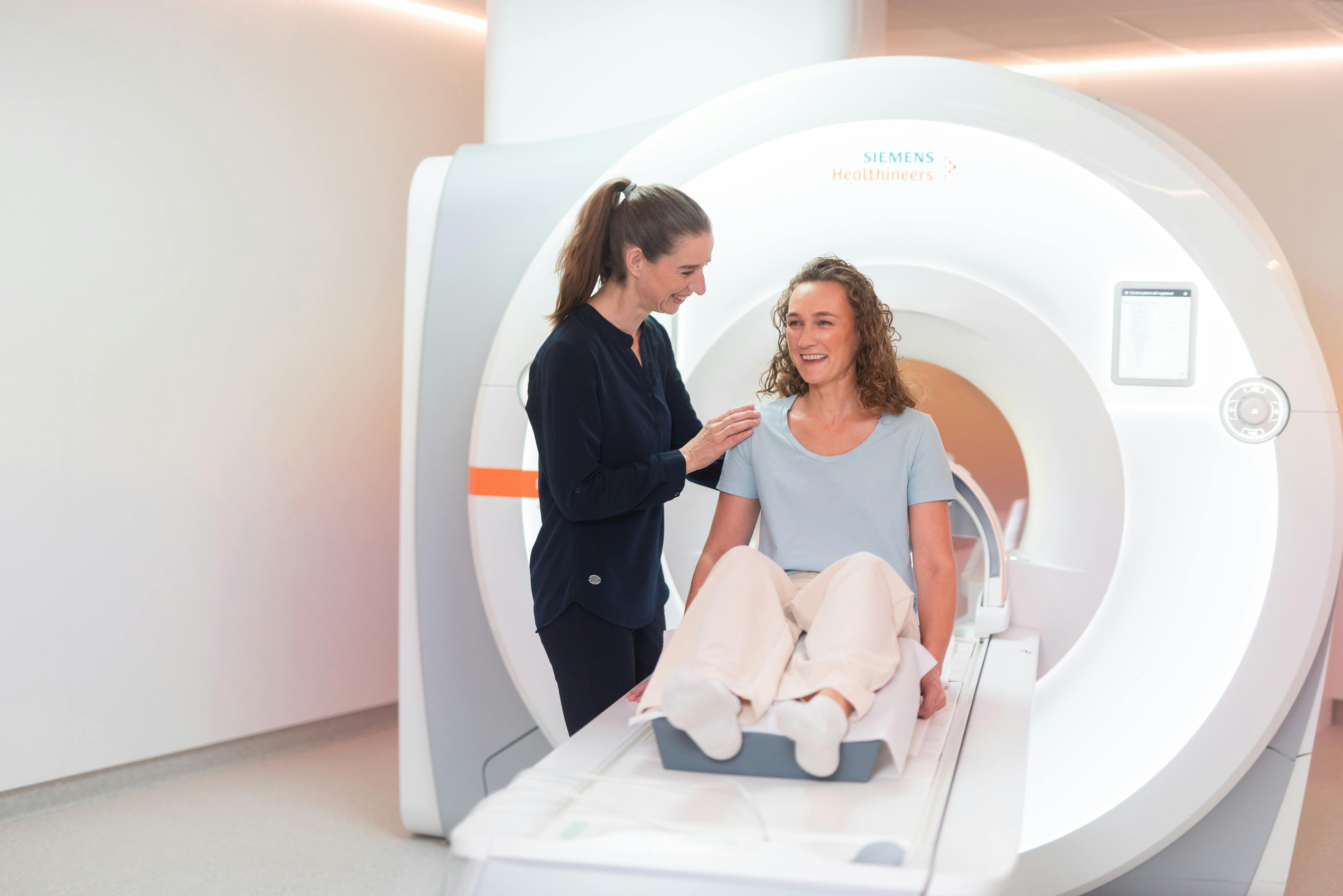

Provides insight into
An MRI scan of your upper abdomen is intended to detect potential conditions early, but if you experience any symptoms or notice significant changes, you should always contact your GP.
General:
- We can, for example, see whether there is a rupture in the abdominal wall and whether abnormalities are visible.
- Diverticula: bulges in the intestines that can become inflamed and cause abdominal pain.
- Liver: fatty liver can be detected.
- Liver abnormalities: other abnormalities in the liver can be detected.
- Aorta: we also examine the body’s main artery (aorta) for abnormalities, such as a dilation (aneurysm).
- Kidneys: we can examine the kidneys for abnormalities, such as large kidney stones or signs of infection.
- Spleen: abnormalities in the spleen can be detected.
What we cannot assess well:
- Esophagus, stomach, and intestines. These organs are too mobile.
- Small kidney stones are not clearly visible.
It is possible that an examination may lead to incidental findings. Before the examination, Prescan will ask whether you wish to be informed about incidental findings for which monitoring or treatment is possible, and incidental findings concerning conditions that may affect your offspring. Prescan is not permitted to inform you about incidental findings for which no monitoring or treatment is possible (see NEN 8051 standard for more information).
The results of the examination can be shared with your general practitioner. For more information about preventive medical examinations, Prescan recommends consulting the following independent sources:


